If you’ve ever stood in front of a styling tool display feeling completely overwhelmed, you’re not alone. Flat irons and curling irons look similar, cost similarly, and are both marketed as “must-haves,” but they’re built for different jobs, and picking the wrong one for your hair goals means wasted money and frustrating styling sessions. Let’s break down exactly what each tool does and how to decide which one belongs on your counter.
What a Flat Iron Actually Does
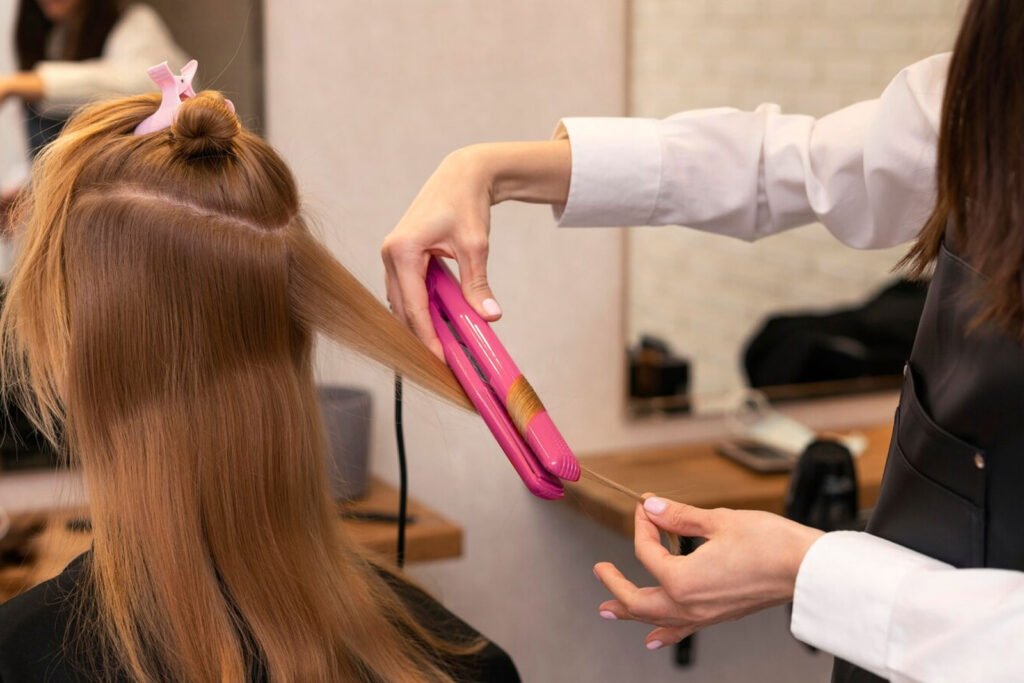
A flat iron uses two heated plates that clamp together to press hair flat as you glide it through. Its primary job is smoothing, eliminating frizz, taming flyaways, and creating sleek, straight styles. But flat irons are more versatile than most people realize. With the right technique, twisting the wrist as you pull the iron through a section, a flat iron can also create loose waves, bends, and even curls. This makes it a genuinely multi-purpose tool if you’re willing to learn a couple of extra techniques.
Flat irons are the better choice if your primary goal is straightening or smoothing, if you have thick, frizzy, or coarse hair that needs taming, if you want one tool that can do both straight styles and loose waves, or if you prefer a more compact tool for travel.
What a Curling Iron Actually Does
A curling iron uses a heated cylindrical barrel that you wrap sections of hair around to create a defined curl or wave. Unlike a flat iron, it’s a single-purpose tool, it’s not going to straighten your hair, but it excels at producing consistent, well-defined curls with far less trial and error than trying to curl with a flat iron.
Barrel size is the biggest variable to understand here. Smaller barrels, under 1 inch, create tight, springy ringlets. Mid-size barrels, 1 to 1.25 inches, produce classic bouncy curls. Larger barrels, 1.5 inches and up, create loose, beachy waves. If you only buy one curling iron, a 1-to-1.25-inch barrel is the most versatile starting point for most hair lengths.
Curling irons are the better choice if your primary goal is adding curl or volume, not removing it, if you want consistent, repeatable curl patterns, if you have hair that holds curl well and you style it often, or if you’re comfortable committing to a specific barrel size for your desired curl type.
Can One Tool Really Replace the Other?
Technically, yes, a skilled hand can create waves with a flat iron, and some curling wands can rough in a bit of texture. But “technically possible” and “practical for your daily routine” are different things. If straight styles are 80% of what you do, buy the flat iron and learn the wrist-twist technique for the occasional wave day. If you’re a curl person through and through, a curling iron will give you far more consistent, professional-looking results with less arm fatigue and fewer redos.
What About Barrel and Plate Materials?
Regardless of which tool you choose, material matters. Ceramic and tourmaline plates or barrels distribute heat evenly and reduce hot spots that cause breakage. Titanium heats up faster and holds higher temperatures, which professionals often prefer for speed, but it requires a slightly more careful hand since it can be less forgiving on fine or damaged hair.
The Bottom Line
Most people who style their hair regularly end up owning both tools eventually, but if you’re building your collection one piece at a time, choose based on your natural hair texture and your most common desired outcome. Fighting frizz and want sleek results most days? Start with a flat iron. Chasing bounce and definition? Start with a curling iron.
Whichever you choose, quality construction makes a real difference in how evenly your hair heats and how much damage you risk. SalonBrandz.com stocks professional flat irons and curling irons from pro brands like BaBylissPRO, built to handle daily use without sacrificing your hair’s health.